
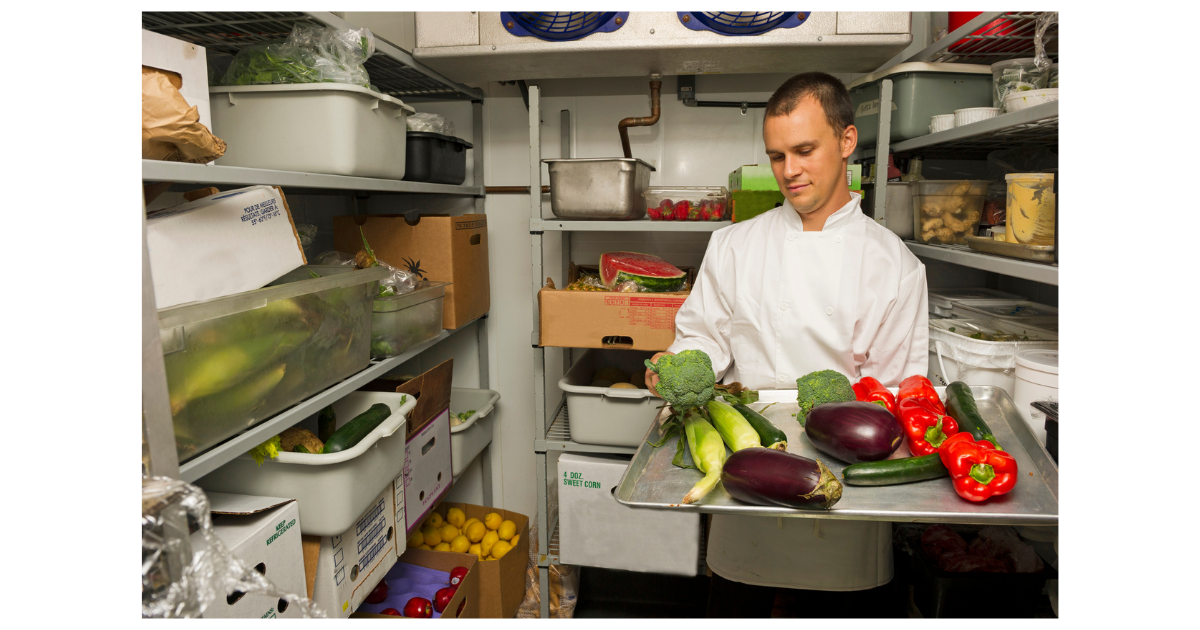
Restaurant inventory management is about much more than just knowing what’s in the storeroom. It affects food costs, purchasing decisions, profitability, service consistency, and the day-to-day efficiency of an operation.
For restaurants, bars, hotels, clubs, golf courses, and other hospitality businesses, poor inventory control can create a chain reaction: inaccurate counts lead to poor ordering decisions, receiving discrepancies go unnoticed, waste goes unaccounted for, and inventory loss eats into already-tight profit margins.
The good news? Strong inventory-control practices can help hospitality operators identify problems, make more informed decisions, and run a more organized operation.
What Is Restaurant Inventory Control?
Restaurant inventory control is the process of tracking and managing the products a business purchases, stores, and uses. It involves monitoring inventory levels, verifying deliveries, completing regular counts, understanding usage, and investigating discrepancies.
Effective inventory control helps operators answer important questions:
- What do we have in stock?
- Are deliveries accurate?
- Are we ordering the right quantities?
- How much inventory are we using compared with what we expect to use?
- Where are waste, discrepancies, or unexplained losses occurring?
- How are inventory costs affecting our profitability?
Without consistent procedures and reliable information, managers may be forced to make important decisions based on estimates rather than facts.
1. Understand How Inventory Affects Profitability
Food and beverage costs are a major consideration for hospitality operators. Even small discrepancies can add up over time, making inventory control an important part of protecting profit margins.
Understanding the relationship between inventory costs and the profit-and-loss statement (P&L) helps managers see how purchasing, usage, waste, and inventory adjustments affect financial performance.
When operators understand their numbers, they are better equipped to investigate unfavorable cost trends, make informed purchasing decisions, and identify opportunities to improve profitability.
2. Improve Receiving Accuracy
Inventory control begins when products arrive.
If a delivery is incomplete, damaged, incorrectly priced, or inconsistent with the order, the discrepancy can affect both inventory records and costs.
Establishing a consistent receiving process helps teams verify quantities, inspect products, compare deliveries with invoices, and document discrepancies before they become larger problems.
A reliable receiving process can help prevent inaccurate records, unnecessary spending, and avoidable disruptions to service.
3. Make Inventory Counts Consistent
Inventory counts provide the information managers need to understand what is available and how much stock is being used.
Inconsistent counting practices can make it difficult to compare inventory levels over time or determine whether a discrepancy reflects actual loss or an inaccurate count.
Effective counting procedures should emphasize consistency, accuracy, clear accountability, and timely recordkeeping. Standardizing these routines across employees and locations can also improve visibility for multi-location operators.
4. Use Variance Analysis to Identify Problems
A variance occurs when actual results differ from what was expected.
In hospitality inventory management, variances can arise from waste, over-portioning, incorrect recipes, receiving discrepancies, recording errors, theft, or other operational issues.
Variance analysis helps managers investigate the difference between expected and actual inventory usage rather than simply accepting an unexplained cost increase.
The goal isn’t merely to find a discrepancy. It’s to understand the cause and take corrective action.
5. Strengthen Loss Prevention
Inventory loss isn’t always the result of one major incident. It can develop through small, recurring problems that go unnoticed.
Examples include unrecorded waste, incorrect portioning, inaccurate receiving, spoilage, and products being used without being properly accounted for.
Consistent inventory counts, accurate receiving records, clear procedures, and regular review of inventory variances help operators identify potential sources of loss and respond appropriately.
6. Prevent Operational Disruptions
Running out of a key ingredient or beverage can affect the guest experience, disrupt service, and force last-minute purchasing decisions.
At the other extreme, ordering too much inventory can tie up cash and increase the risk of spoilage, waste, and unnecessary storage demands.
Good inventory control helps managers make better-informed decisions about what to order, what is available, and where discrepancies need investigation.
The result is a more organized operation with better information to support daily decisions.
7. Invest in Inventory-Control Skills
Inventory technology can make information easier to access, but effective inventory control also depends on understanding the processes behind the numbers.
Hospitality professionals who understand the economics of the P&L, receiving, counting, variance analysis, and loss prevention are better equipped to recognize problems and apply consistent procedures.
That knowledge can benefit business owners who want to improve operations as well as managers and employees who want to strengthen their professional skills.
Build Your Inventory-Control Expertise with Orca Inventory
Orca Inventory’s online Certified Inventory Specialist program covers the fundamentals of effective inventory control, from the economics of the P&L to receiving, counting, variance analysis, and loss prevention.
Whether you’re responsible for protecting your operation’s margins, improving day-to-day processes, or developing your hospitality-management skills, the program offers an invaluable way to build your knowledge and fortify your operation.
Ready to strengthen your inventory-control knowledge?
Explore the program and learn more:
